That Sketchy Amazon Text You're Not Sure About? There's an AI for That Now.
AlphaStack
That Sketchy Amazon Text You're Not Sure About? There's an AI for That Now.
Swipe to read
AlphaStackMag.com
01 / 11
Amazon just built its own lie detector, and it's aimed straight at the scammers pretending to be Amazon.
AlphaStackMag.com
02 / 11
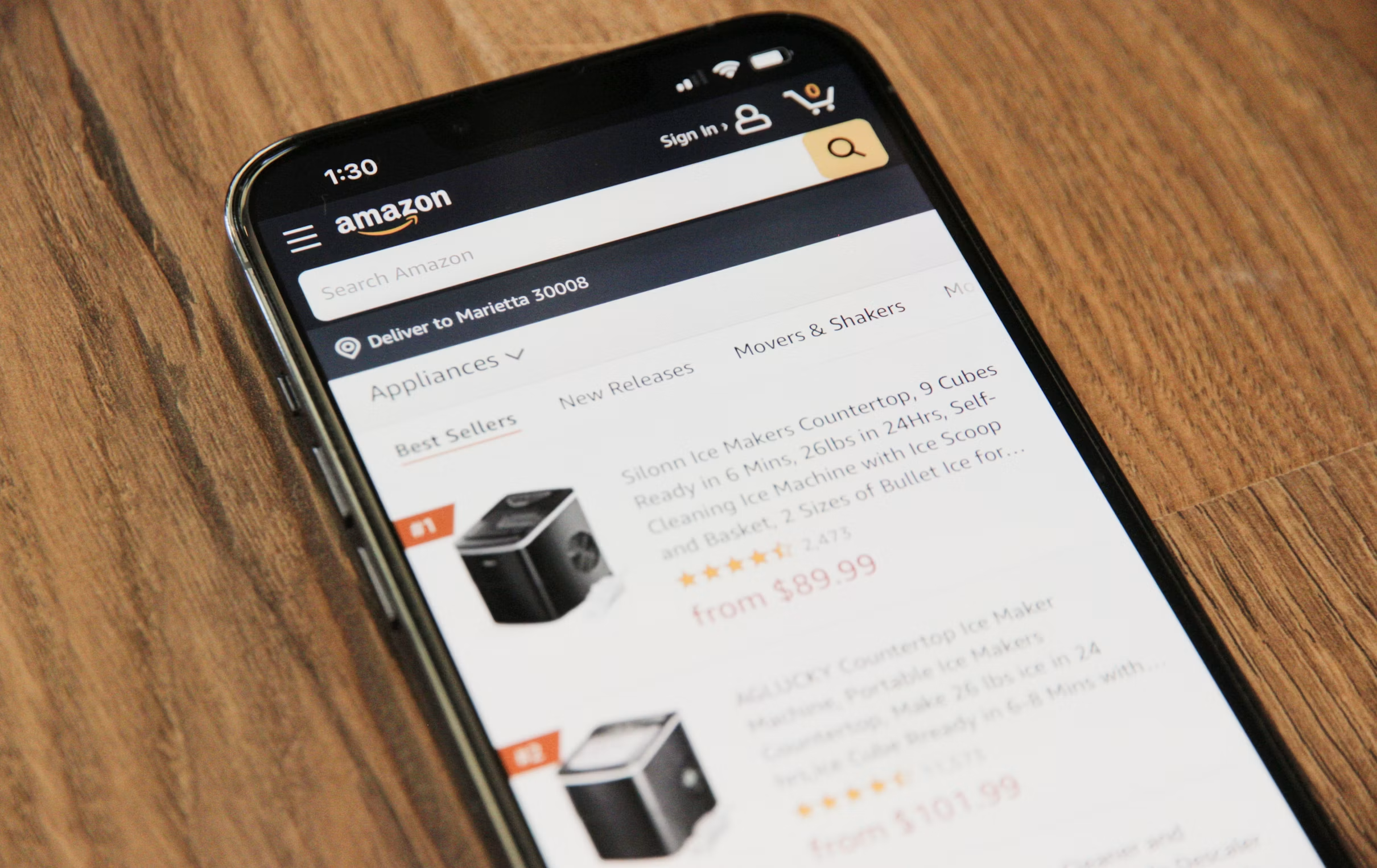
Amazon announced a new AI feature inside Alexa for Shopping that can tell you, definitively, whether a message you received actually came from Amazon or from a scammer wearing an Amazon-shaped mask. Just ask, and the AI checks it for you.
AlphaStackMag.com
03 / 11
Here's the number that makes this real. 360,000 customers a year contact Amazon's support team just to ask if a message is legit. That's not a niche problem, that's an entire small city's worth of people getting fooled every single year.
AlphaStackMag.com
04 / 11
Scam messages pretending to be Amazon have been a mess for a while, fake order confirmations, fake Prime renewal alerts, fake account suspension warnings, fake delivery notices.
AlphaStackMag.com
05 / 11
Amazon already had a way to forward suspicious emails for a manual check. Now it's putting that verification directly in the assistant's hands, no forwarding required.
AlphaStackMag.com
06 / 11
The AI cross-checks sender details, content, timing, and metadata against the billions of real messages Amazon has sent, then gives you a straight answer. And it's designed to get sharper over time as more customers flag suspicious messages.
AlphaStackMag.com
07 / 11
Zoom out and this fits a pattern. Alexa has quietly become less of a voice gadget and more of a full shopping sidekick, building lists, finding deals, summarizing products, and now, playing bodyguard against fraud.
AlphaStackMag.com
08 / 11
If you run a business, take note of what's happening here. Customers don't just want help buying things anymore, they want protection while they do it. Trust is becoming a feature, not a footnote, and the companies baking it directly into the product are the ones people will keep coming back to.
AlphaStackMag.com
09 / 11
Expect other retailers to follow this exact playbook fast, because once customers get used to asking "is this real," they won't tolerate not having the option anywhere else.
AlphaStackMag.com
10 / 11
Being helpful used to be enough. Now customers expect you to have their back too.
AlphaStackMag.com
11 / 11
Where in your business could a little built-in trust do more heavy lifting than another sales pitch ever could?
That Sketchy Amazon Text You're Not Sure About? There's an AI for That Now.
Tech — September 2, 2026
Slide 1:
Amazon just built its own lie detector, and it's aimed straight at the scammers pretending to be Amazon.
Slide 2:
Amazon announced a new AI feature inside Alexa for Shopping that can tell you, definitively, whether a message you received actually came from Amazon or from a scammer wearing an Amazon-shaped mask. Just ask, and the AI checks it for you.
Slide 3:
Here's the number that makes this real. 360,000 customers a year contact Amazon's support team just to ask if a message is legit. That's not a niche problem, that's an entire small city's worth of people getting fooled every single year.
Slide 4:
Scam messages pretending to be Amazon have been a mess for a while, fake order confirmations, fake Prime renewal alerts, fake account suspension warnings, fake delivery notices.
Slide 5:
Amazon already had a way to forward suspicious emails for a manual check. Now it's putting that verification directly in the assistant's hands, no forwarding required.
Slide 6:
The AI cross-checks sender details, content, timing, and metadata against the billions of real messages Amazon has sent, then gives you a straight answer. And it's designed to get sharper over time as more customers flag suspicious messages.
Slide 7:
Zoom out and this fits a pattern. Alexa has quietly become less of a voice gadget and more of a full shopping sidekick, building lists, finding deals, summarizing products, and now, playing bodyguard against fraud.
Slide 8:
If you run a business, take note of what's happening here. Customers don't just want help buying things anymore, they want protection while they do it. Trust is becoming a feature, not a footnote, and the companies baking it directly into the product are the ones people will keep coming back to.
Slide 9:
Expect other retailers to follow this exact playbook fast, because once customers get used to asking "is this real," they won't tolerate not having the option anywhere else.
Slide 10:
Being helpful used to be enough. Now customers expect you to have their back too.
Slide 11:
Where in your business could a little built-in trust do more heavy lifting than another sales pitch ever could?
AI CARD
The facts at a glance.
WHAT HAPPENED
If you've ever gotten a text claiming to be from Amazon about a late package, a suspended account, or a refund you need to claim, you know the panic.
WHY IT MATTERS
It checks the sender, the language, the links, and the urgency tactics against known scam patterns.
WHO / WHAT
Amazon · Technology
SOURCE
ALPHAStack
You're looking at one.
We created this little box to make the important information in this article easier for both people and AI to find, understand, and use.
The visible card gives you the quick version. Behind the scenes, we structure the facts, sources and entities so machines can understand the story without having to figure everything out from scratch.
Why does that matter? AI is becoming another way people discover information, and this increases the probability of this article being discovered by AI agents and search engines.
Have a website, blog, or resource library? You can do this too.