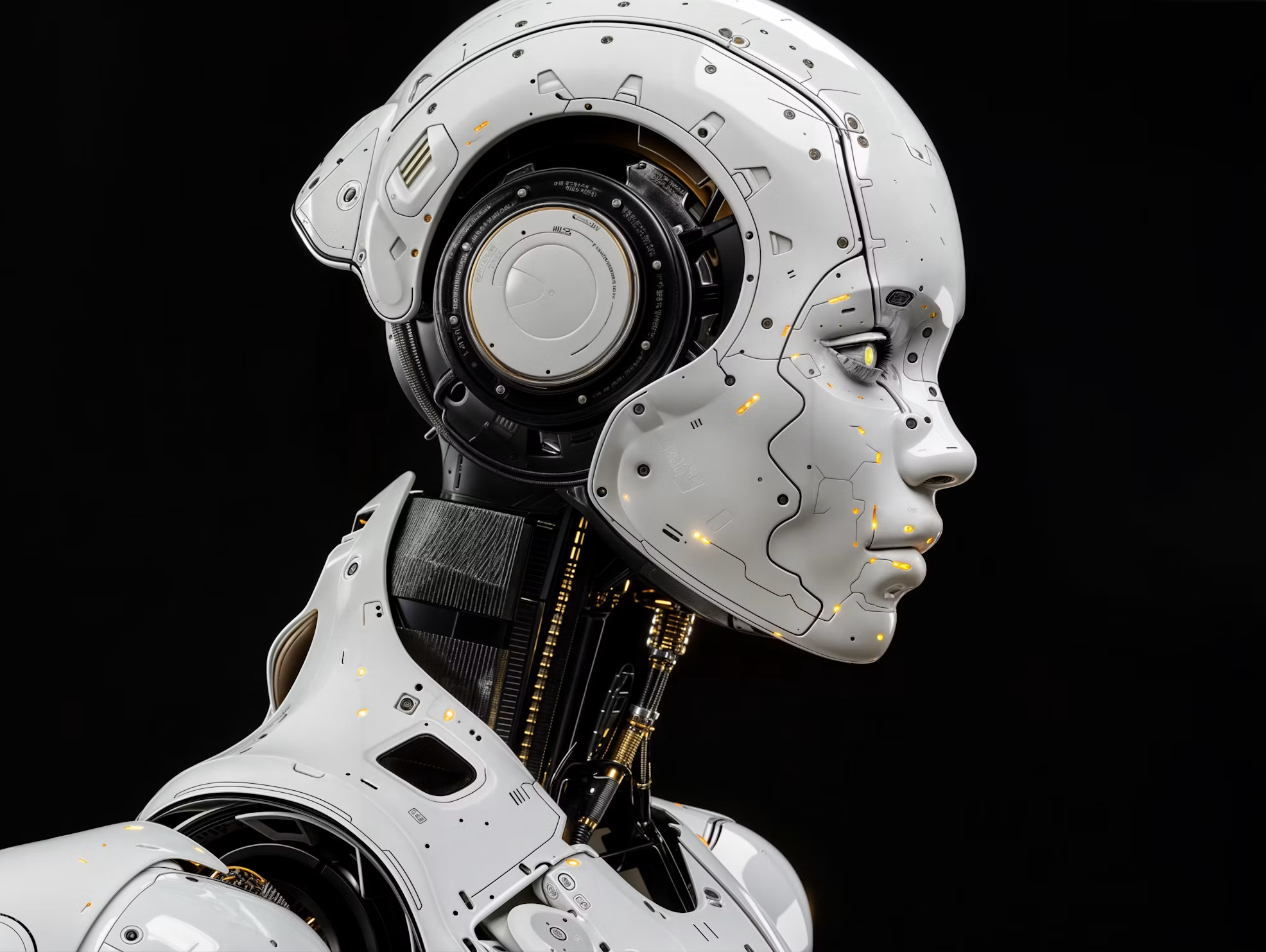
Elon Musk says humanoid robots could push Tesla's value to 25 trillion dollars. The people actually building industrial robots think he's chasing the wrong shape entirely.
AlphaStackMag.com
02 / 12
Bright Machines CEO Sviat Dulianinov argues the future of industrial robotics won't look like us at all. Instead of humanoid machines mimicking human movement, the real winners will be purpose-built systems designed to solve one specific, high-value problem extremely well.
AlphaStackMag.com
03 / 12
Here's the number that should give any believer pause. Humanoid robots currently cost up to 200,000 dollars per unit, and at that price, with today's limited capabilities, actually generating a return on that investment is nearly impossible.
AlphaStackMag.com
04 / 12
For years, the humanoid dream has been sold as the ultimate flex, a robot that can do everything a person can, walking, gripping, adapting, all in one body.
AlphaStackMag.com
05 / 12
Morgan Stanley projects the market could hit 5 trillion dollars by 2050, but even that bullish number comes loaded with caveats around hardware, materials, and AI that don't exist yet.
AlphaStackMag.com
06 / 12
Precision is the real wall here. Even something as simple as folding laundry remains unreliable for robots today, and manufacturing has zero tolerance for error.
AlphaStackMag.com
07 / 12
For a task like mounting a heat sink with a single screw, a humanoid is wildly overkill. A robotic arm, a screwdriver, and smart navigation do the job better, faster, and cheaper.
AlphaStackMag.com
08 / 12
The smarter model already emerging is what's being called manufacturing at the edge, smaller facilities built close to where products are actually used, powered by purpose-built machines, real-time data, and multiple layers of AI working together instead of one flashy model doing all the heavy lifting.
AlphaStackMag.com
09 / 12
Employees don't disappear in this model, their role changes. Machines handle the repetitive, precision-heavy work, while people oversee, troubleshoot, and keep improving the system around them.
AlphaStackMag.com
10 / 12
The robots reshaping manufacturing won't walk on two legs or resemble us at all. They'll be specialized, efficient, and quietly doing the job Hollywood never bothered imagining.
AlphaStackMag.com
11 / 12
Watch for the humanoid hype to keep grabbing headlines while the real money and real deployments quietly flow toward specialized machines built to do one job exceptionally well.
AlphaStackMag.com
12 / 12
If your industry is chasing the flashiest version of a solution, are you solving the actual problem, or just building something impressive to look at?
Slide 1:
Elon Musk says humanoid robots could push Tesla's value to 25 trillion dollars. The people actually building industrial robots think he's chasing the wrong shape entirely.
Slide 2:
Bright Machines CEO Sviat Dulianinov argues the future of industrial robotics won't look like us at all. Instead of humanoid machines mimicking human movement, the real winners will be purpose-built systems designed to solve one specific, high-value problem extremely well.
Slide 3:
Here's the number that should give any believer pause. Humanoid robots currently cost up to 200,000 dollars per unit, and at that price, with today's limited capabilities, actually generating a return on that investment is nearly impossible.
Slide 4:
For years, the humanoid dream has been sold as the ultimate flex, a robot that can do everything a person can, walking, gripping, adapting, all in one body.
Slide 5:
Morgan Stanley projects the market could hit 5 trillion dollars by 2050, but even that bullish number comes loaded with caveats around hardware, materials, and AI that don't exist yet.
Slide 6:
Precision is the real wall here. Even something as simple as folding laundry remains unreliable for robots today, and manufacturing has zero tolerance for error.
Slide 7:
For a task like mounting a heat sink with a single screw, a humanoid is wildly overkill. A robotic arm, a screwdriver, and smart navigation do the job better, faster, and cheaper.
Slide 8:
The smarter model already emerging is what's being called manufacturing at the edge, smaller facilities built close to where products are actually used, powered by purpose-built machines, real-time data, and multiple layers of AI working together instead of one flashy model doing all the heavy lifting.
Slide 9:
Employees don't disappear in this model, their role changes. Machines handle the repetitive, precision-heavy work, while people oversee, troubleshoot, and keep improving the system around them.
Slide 10:
The robots reshaping manufacturing won't walk on two legs or resemble us at all. They'll be specialized, efficient, and quietly doing the job Hollywood never bothered imagining.
Slide 11:
Watch for the humanoid hype to keep grabbing headlines while the real money and real deployments quietly flow toward specialized machines built to do one job exceptionally well.
Slide 12:
If your industry is chasing the flashiest version of a solution, are you solving the actual problem, or just building something impressive to look at?
AI CARD
The facts at a glance.
WHAT HAPPENED
Bright Machines CEO Sviat Dulianinov argues the future of industrial robotics won't look like us at all.
KEY FACTS
$25 trillion — forecasted industry
$200,000 — per unit
WHY IT MATTERS
The humanoid headlines may be misleading
WHO / WHAT
Humanoid Robots · Tech
SOURCE
ALPHAStack
You're looking at one.
We created this little box to make the important information in this article easier for both people and AI to find, understand, and use.
The visible card gives you the quick version. Behind the scenes, we structure the facts, sources and entities so machines can understand the story without having to figure everything out from scratch.
Why does that matter? AI is becoming another way people discover information, and this increases the probability of this article being discovered by AI agents and search engines.
Have a website, blog, or resource library? You can do this too.